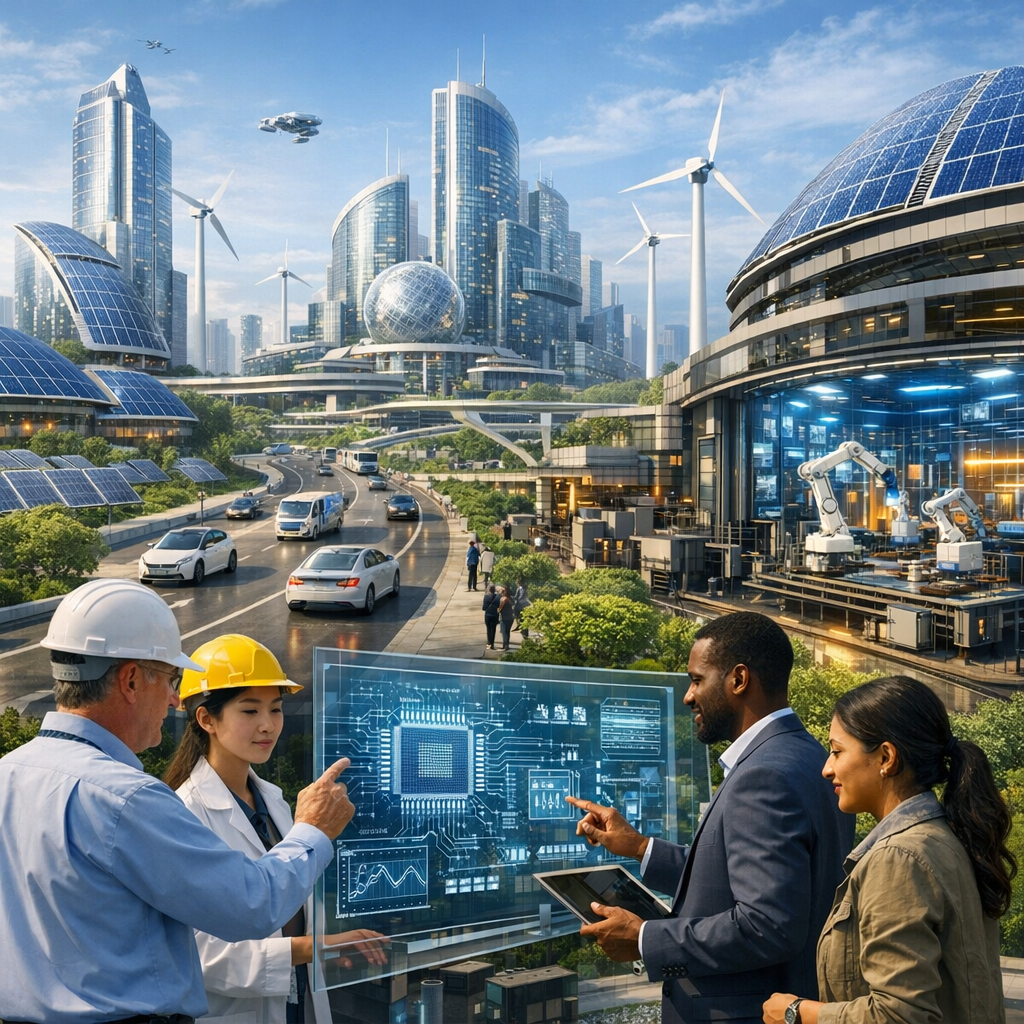
Managing the Rapid Expansion of AI, Innovative Energy Solutions, and Microchip Manufacturing
Related Analysis
The AI Expansion: Balancing Infrastructure and Expertise
As artificial intelligence (AI) technologies continue to evolve at an unprecedented pace, there is growing concern about the gap between rapid infrastructure deployment and the corresponding development of workforce expertise. This misalignment poses significant risks, as the potential of AI systems may not be fully realized, or worse, could lead to unintended consequences.
The deployment of AI infrastructure has outpaced the ability of the workforce to develop a consistent and shared understanding of these technologies. This has resulted in a fragmented landscape where the potential of AI is not being harnessed optimally. Experts suggest that the key to bridging this gap lies in standardization and education.
Standardization can provide a common framework that ensures all stakeholders are on the same page regarding AI development and implementation. This could involve establishing industry-wide protocols and best practices that guide the deployment and use of AI technologies. Alongside standardization, a concerted effort to enhance education and training programs is critical. By equipping the workforce with the necessary skills and knowledge, organizations can better manage their AI initiatives and mitigate potential risks.
"The system as a whole hasn’t developed a consistent, shared understanding at the same rate as the infrastructure is being deployed," noted an industry expert. "Addressing this disparity through standardization and education is essential to harnessing AI's full potential."
Lidl’s Innovative Solution to the Energy Crisis
In light of the ongoing energy crisis, Lidl has introduced a groundbreaking product: a super-cheap solar balcony battery. This innovative device allows consumers to store solar energy for later use or during emergencies, offering a practical solution to energy instability and potential cost savings.
The solar balcony battery is designed to provide users with a reliable backup energy source, helping to maintain power during outages or peak demand periods. This development is particularly significant as it empowers consumers to take control of their energy consumption and reduce their reliance on traditional power grids.
By making solar energy storage more accessible and affordable, Lidl is helping to democratize renewable energy solutions. This move not only addresses immediate energy needs but also contributes to broader efforts to transition towards more sustainable energy practices.
- Affordable and practical energy storage solution.
- Empowers consumers to manage their energy consumption.
- Contributes to sustainable energy transition.
Transforming Microchip Manufacturing with InchFab’s Fab-in-a-Box
A US-based startup, InchFab, is revolutionizing the semiconductor industry with its compact semiconductor fabrication systems, dubbed "fab-in-a-box." This innovation aims to do for microchips what IBM did for personal computers by making semiconductor fabrication more accessible and cost-effective.
InchFab's approach utilizes smaller wafers, which significantly reduces manufacturing costs and simplifies workforce training. This is particularly beneficial for specialized industries that require customized microchips but cannot afford traditional fabrication processes. By lowering the barriers to entry, InchFab is enabling more companies to participate in the semiconductor market, fostering innovation and competition.
This development comes at a crucial time as the demand for semiconductors continues to grow across various sectors, including automotive, consumer electronics, and telecommunications. With the fab-in-a-box, InchFab is positioning itself as a key player in the effort to decentralize and democratize microchip manufacturing.
"Just imagine what could get done," says the company's spokesperson, reflecting on the potential impact of making semiconductor fabrication more accessible and affordable.
Conclusion
As we navigate the complexities of technological advancements across AI, energy, and manufacturing sectors, it is clear that a cohesive approach involving standardization, education, and innovative solutions is essential. Addressing the disparities between infrastructure deployment and workforce expertise in AI, providing accessible energy solutions, and democratizing microchip manufacturing are critical steps toward ensuring sustainable growth and development.
By embracing these strategies, stakeholders can better manage the rapid expansion of technology and harness its potential for positive change. As we move forward, continuous collaboration and innovation will be key to overcoming the challenges we face today.