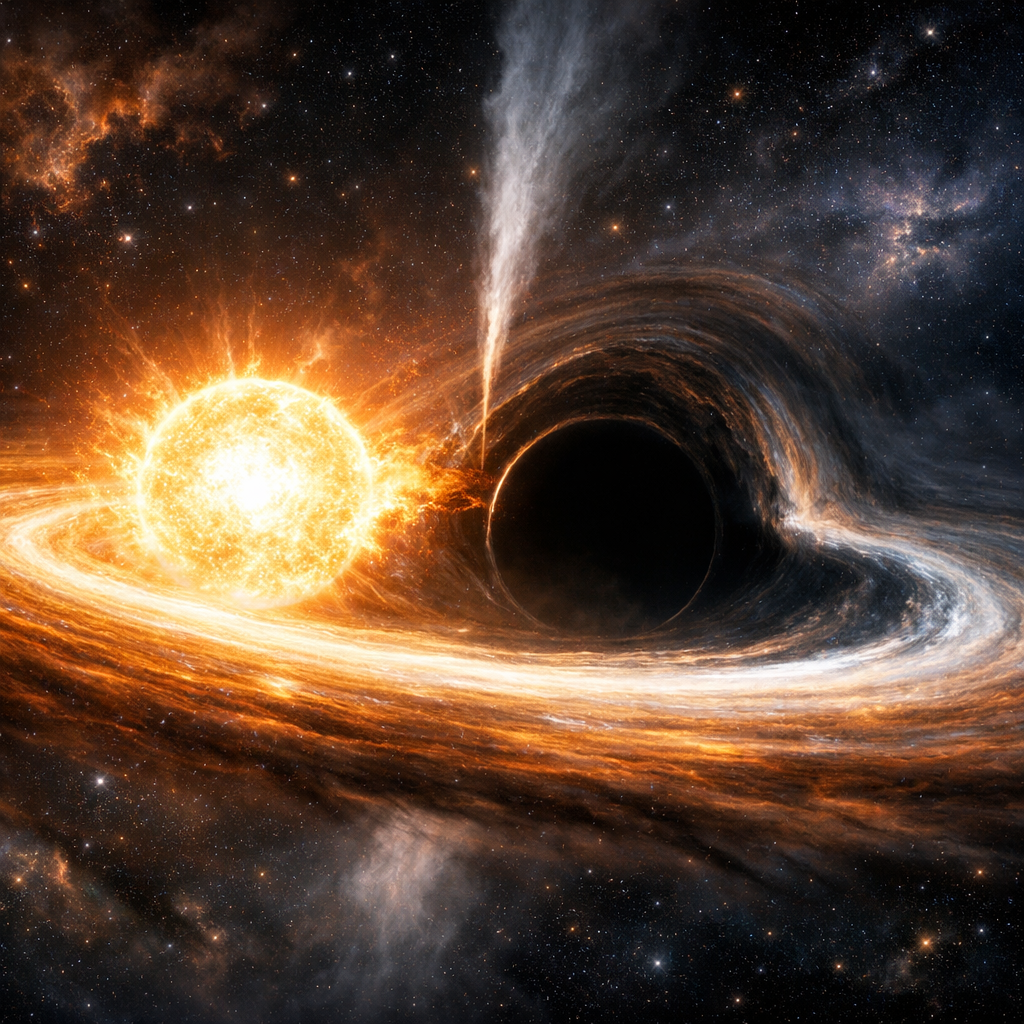
Unveiling the Mysteries of the Cosmos: The Discovery of a Black Hole Star
Related Analysis
In an astonishing revelation, astronomers have identified a celestial object that challenges our understanding of the universe. The James Webb Space Telescope has unveiled what is now being referred to as a "Black Hole Star," an object that may offer an explanation for the enigmatic red spots observed in the early universe.
The Revolutionary James Webb Space Telescope
Launched in December 2021, the James Webb Space Telescope has been at the forefront of astronomical discoveries. Its state-of-the-art technology allows scientists to peer deeper into space and time than ever before. By capturing infrared light, the telescope provides unprecedented views of the cosmos, enabling the study of distant galaxies and phenomena that were previously beyond our reach.
The Enigma of the Red Spots
Since its deployment, the James Webb Space Telescope has captured images that have puzzled astronomers worldwide, among them the mysterious red spots in the early universe. These spots, visible in the telescope's deep field images, have sparked intense debate among scientists as they seek to understand their nature and origin.
Initial theories suggested that these red spots were distant galaxies or clusters of stars. However, recent analyses have pointed to an alternative explanation — the existence of a new type of astronomical object.
The Black Hole Star Hypothesis
The concept of a Black Hole Star is a groundbreaking development in astrophysics. This hypothesized object is believed to form under unusual conditions in the early universe. The immense gravitational pull of a black hole at its core would capture surrounding matter, generating intense heat and light. This process could explain the distinct red hue observed in the telescope's images.
Researchers suggest that Black Hole Stars could have played a critical role in shaping the universe during its formative years. By studying these objects, scientists hope to gain insights into the processes that governed the early cosmos.
Implications for Our Understanding of the Universe
The discovery of Black Hole Stars has profound implications for our understanding of the universe. If confirmed, these objects could redefine our models of stellar evolution and the formation of galaxies. The presence of black holes at such an early stage in the universe's history raises intriguing questions about their origin and impact on cosmic development.
This breakthrough highlights the importance of continued exploration and observation. As astronomers analyze data from the James Webb Space Telescope, we can anticipate further revelations that will challenge and expand our knowledge of the universe.
Future Prospects and Challenges
While the discovery of Black Hole Stars is a significant milestone, it also presents new challenges for astronomers. Developing a comprehensive understanding of these objects will require further observations, simulations, and collaboration across the scientific community. As we continue to explore the cosmos, the mysteries of Black Hole Stars will undoubtedly inspire future generations of scientists.
"The discovery of Black Hole Stars is a testament to human curiosity and the relentless pursuit of knowledge. As we uncover the secrets of the universe, we are reminded of the boundless possibilities that await us in the cosmos." — Dr. Emily Carter, Astrophysicist
Conclusion
The discovery of a Black Hole Star by the James Webb Space Telescope marks a pivotal moment in our exploration of the universe. This enigmatic object not only provides a potential solution to the mystery of the red spots but also opens up new avenues for research and discovery. As we continue to unravel the complexities of the cosmos, the story of Black Hole Stars will serve as a reminder of the wonders that lie beyond our planet.
Looking ahead, the quest to understand these celestial phenomena will drive innovation and inspire future breakthroughs in astronomy. With each new discovery, we take another step closer to comprehending the vast, intricate universe we inhabit.
- Launch Date of James Webb Space Telescope: December 2021
- Current Year: 2026
- Key Discoveries: Black Hole Stars, Red Spots in Early Universe
- Significance: New Insights into Stellar Evolution and Galaxy Formation