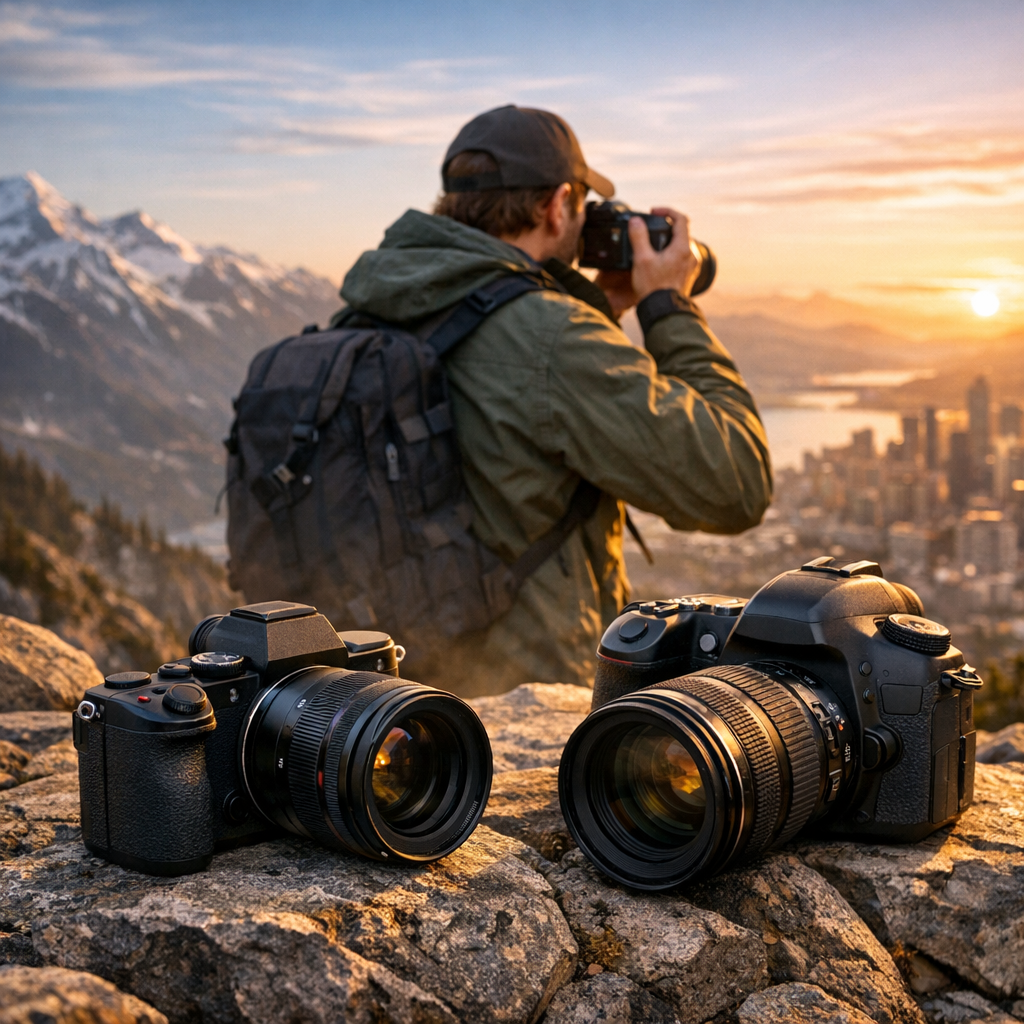
Choosing Between Mirrorless and DSLR Cameras: A Comprehensive Guide
Related Analysis
The evolution of camera technology has led to a significant debate among photographers—whether to choose a mirrorless camera or stick with a DSLR. As the industry leans towards mirrorless, many wonder if it’s time to leave behind the traditional DSLR. This article explores the features, advantages, and drawbacks of both camera types to help you make an informed decision.
Understanding the Basics: Mirrorless vs DSLR
Digital Single-Lens Reflex (DSLR) cameras have been the cornerstone of photography for several decades. They are known for their optical viewfinder, which provides a direct optical view through the camera lens using a mirror mechanism. This construction offers a real-time preview, beneficial in various lighting conditions.
On the other hand, mirrorless cameras, as the name suggests, do not have a mirror mechanism. Instead, they use electronic viewfinders or the camera’s display screen for composition. This technology allows for more compact designs and often results in a lighter camera body.
Advantages of DSLR Cameras
DSLR cameras boast several advantages that have made them a favorite among professional photographers. Firstly, they offer a broader range of lens options, thanks to their long-standing presence in the market. This variety allows photographers to choose from numerous specialized lenses tailored to different photography styles.
Additionally, DSLR cameras typically provide superior battery life. The optical viewfinder does not require power, which significantly extends the shooting duration compared to electronic viewfinders in mirrorless cameras.
Advantages of Mirrorless Cameras
Mirrorless cameras have surged in popularity due to their technological advancements and user-friendly features. One notable advantage is their compact size, making them ideal for travel and street photography, where portability is crucial.
Moreover, mirrorless cameras excel in video recording capabilities. Their advanced autofocus systems and high-quality video outputs make them a preferred choice for videographers and content creators.
Performance and Image Quality
When it comes to image quality, both DSLR and mirrorless cameras deliver exceptional results. However, mirrorless cameras have recently closed the gap with their DSLR counterparts, offering high-resolution sensors and impressive image processing capabilities.
The autofocus performance in mirrorless cameras has also seen dramatic improvements, with many models now outperforming DSLRs in speed and accuracy. This advancement is particularly beneficial for capturing fast-moving subjects in sports or wildlife photography.
Cost Considerations
Price is often a decisive factor when choosing a camera. Traditionally, DSLRs have been more budget-friendly, especially entry-level models. However, as the technology matures, mirrorless cameras are becoming increasingly affordable, providing competitive options for amateur and professional photographers alike.
It is crucial to consider the long-term investment, as mirrorless cameras may require additional purchases such as adapters for existing lenses, potentially increasing the overall cost.
Future of Camera Technology
The camera industry is witnessing a clear shift towards mirrorless technology, with major manufacturers focusing their research and development efforts on this segment. This trend suggests that mirrorless cameras will continue to receive the most significant innovations, potentially leaving DSLRs behind in terms of technological advancements.
However, for photographers who are deeply invested in DSLR systems, the decision to switch may not be immediate. Consider factors such as personal preference, existing equipment, and specific photography needs before making the switch.
Conclusion
Ultimately, the choice between mirrorless and DSLR cameras depends on individual needs and preferences. Mirrorless cameras offer cutting-edge technology and portability, making them an excellent choice for photographers seeking the latest innovations. Meanwhile, DSLRs continue to provide reliability and a wide range of lens options, appealing to those who value traditional photography experience.
As the industry evolves, staying informed about technological advancements will ensure you make the best choice for your photography journey. Whether you opt for a mirrorless system or remain with a trusty DSLR, both options offer incredible potential to capture stunning images.
"Photography is the story I fail to put into words." – Destin Sparks
With this comprehensive guide, we hope you are better equipped to decide which camera type suits your needs. Remember, the best camera is the one that feels right in your hands and inspires your creativity.
Related Topics
For readers interested in staying updated on technology and photography, consider exploring articles on recent trends in camera technology, smartphone photography advancements, and tips for mastering the art of photography in various environments.
As we move further into 2026, the landscape of photography continues to evolve, and staying informed will ensure you remain at the forefront of this ever-changing field.