Innovations in Tech: From EV Charging to AI-Integrated Smart Homes
Related Analysis
As we find ourselves firmly in 2026, the landscape of technology continues to evolve at a rapid pace, bringing about innovations that promise to reshape our everyday experiences. Among the noteworthy advancements are Osprey's automatic EV charging system, UGreen’s AI-driven smart home solutions, and XDOF's burgeoning presence in the world of robotics data management. Each of these innovations addresses specific frustrations or gaps in their respective fields, though they are not without their own sets of challenges.
Osprey's Automatic EV Charging: A Step Forward but Not the Final Solution
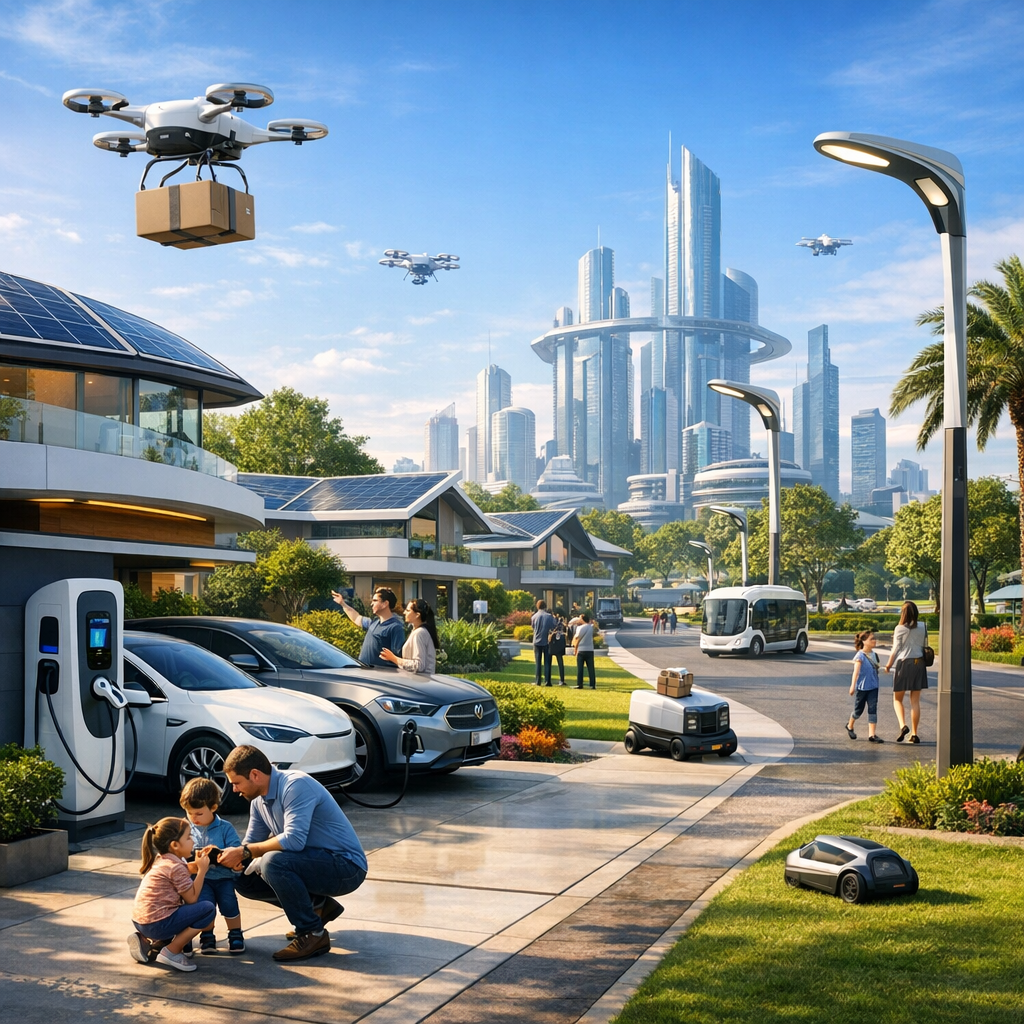
Electric vehicles (EVs) are no longer a futuristic concept but a significant part of our present-day transportation landscape. Despite their growing popularity, one of the persistent frustrations for EV owners has been the cumbersome process of charging. Osprey is stepping into this space with a promising solution—an automatic EV charging system that allows users to simply "plug in and walk away." This innovation aims to eliminate the tediousness associated with manual charging and enhance user convenience.
The introduction of Osprey's new app, which facilitates this automatic charging experience, represents a significant leap forward. It reduces user intervention and streamlines the charging process. However, despite these advancements, the system cannot be seen as a panacea. The EV charging infrastructure remains fragmented, with different systems and standards that continue to create compatibility issues. Thus, while Osprey's innovation is a welcome development, it underscores the need for a more unified approach to EV charging infrastructure.
UGreen: Revolutionizing Smart Homes with AI
In the realm of smart homes, UGreen is making waves with its latest AI-led network-attached storage (NAS) technology. This innovation promises to integrate local storage, computing, and smart-home control into a cohesive unit. I had the opportunity to witness this technology in action, and the potential it holds for transforming home automation is remarkable.
UGreen's approach leverages AI to manage and optimize the various components of a smart home system. It ensures seamless communication between devices, enhances data security with local storage solutions, and offers users a higher degree of control over their smart environments. The integration of these elements could indeed be a game changer, offering solutions that are not only efficient but also user-friendly.
Yet, as promising as it is, the implementation of such advanced technology poses challenges. It requires significant investment in infrastructure and consumer education to ensure users can fully leverage the system's capabilities. Nonetheless, UGreen's strides in AI technology are paving the way for a more interconnected and intelligent home environment.
XDOF: A Rising Star in Robotics Data Management
In the field of robotics and data management, XDOF has emerged as a noteworthy contender. Having only recently come out of stealth mode, the company is already in talks for a Series B funding round, with a projected valuation of $1.2 billion. This rapid rise is indicative of the significant interest and potential investors see in XDOF's offerings.
XDOF specializes in the management and analysis of data generated by robotic systems. In an era where robotics is becoming increasingly integral to industries ranging from manufacturing to healthcare, the ability to efficiently handle and interpret this data is crucial. XDOF's solutions promise to provide businesses with the insights needed to optimize their robotic operations, thereby improving efficiency and productivity.
Despite its promising outlook, XDOF faces the challenge of scaling its operations to meet the growing demand for its services. The company's success will hinge on its ability to maintain innovation while expanding its reach and capabilities.
Conclusion: The Ongoing Journey of Technological Innovation
The advancements by Osprey, UGreen, and XDOF highlight the dynamic nature of technological innovation as we progress through 2026. Each company is addressing specific challenges within their fields, offering solutions that are both innovative and practical. However, as with any technological advancement, these innovations come with their own set of challenges that must be navigated carefully.
As consumers and businesses continue to adapt to these technological changes, the focus should remain on creating systems that are not only advanced but also accessible and user-friendly. The future of technology lies in its ability to solve real-world problems while remaining grounded in human-centric design and usability.
The journey of innovation is ongoing, and with companies like Osprey, UGreen, and XDOF leading the charge, the future looks promising indeed.