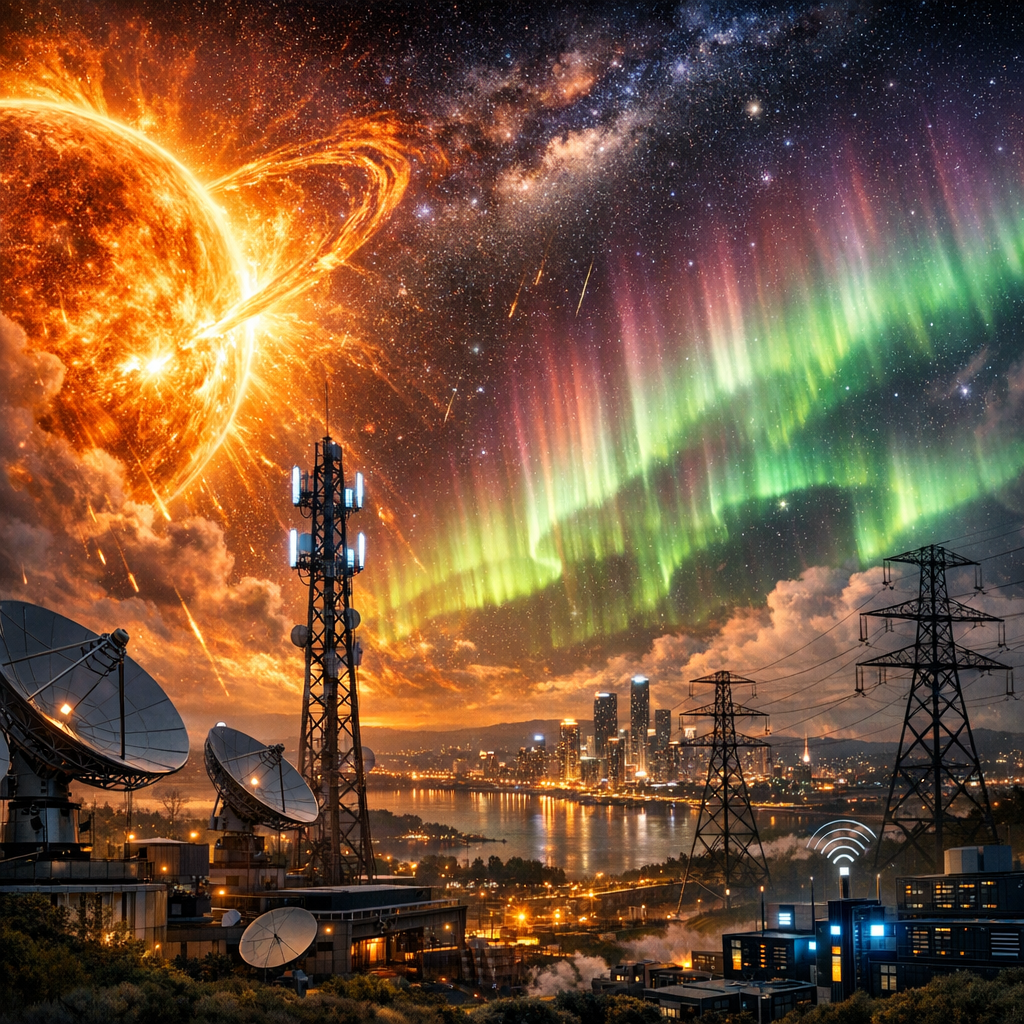
Understanding the Impact of a Solar Storm on Modern Technology
Related Analysis
In recent years, solar storms have emerged as a significant threat to modern technology, with their potential to disrupt various systems that are integral to daily life. A notable incident occurred last November when a solar storm impacted Earth, causing a GPS glitch that led to the malfunction of self-driving cars. This event highlights the growing importance of understanding solar storm phenomena and preparing for their potential impacts on technology and infrastructure.
The Nature of Solar Storms
Solar storms, also known as geomagnetic storms, are disturbances in space weather caused by the Sun's activity. These storms occur when solar flares or coronal mass ejections (CMEs) release vast amounts of energy and charged particles into space. When these particles reach Earth, they interact with the planet's magnetic field, causing disruptions in the ionosphere and magnetosphere.
Although solar storms are natural occurrences, their increasing frequency and intensity have raised concerns among scientists and researchers. The storm last November was particularly severe, highlighting the need for enhanced monitoring and preparedness strategies.
Impact on Technology
The recent solar storm demonstrated the vulnerability of certain technologies to space weather events. GPS systems, which are crucial for navigation and timing, experienced significant disruptions during the storm. This glitch was severe enough to affect self-driving cars, which rely heavily on accurate GPS data to navigate safely.
Self-driving cars, a symbol of technological advancement, are equipped with a variety of sensors and systems to ensure safe operation. However, their reliance on GPS for precise location data makes them susceptible to solar storm-induced errors. During the November storm, several incidents of self-driving cars malfunctioning were reported, underscoring the need for robust backup systems and enhanced resilience against such events.
Mitigation Strategies
To mitigate the risks posed by solar storms, researchers and industry leaders are exploring various strategies. One approach is to enhance the resilience of GPS systems through improved algorithms and alternative positioning technologies. Additionally, the development of more sophisticated forecasting models can help predict solar storm activity and provide early warnings to affected sectors.
Another important aspect of mitigation is the integration of fail-safe mechanisms in self-driving cars. By incorporating redundant systems and alternative navigation methods, these vehicles can maintain functionality even during GPS outages. Collaboration between technology developers, scientists, and policymakers is crucial to ensuring that future generations of self-driving cars are better equipped to handle solar storm disruptions.
The Role of Research and Development
Ongoing research and development play a pivotal role in addressing the challenges posed by solar storms. Institutions around the world are investing in the study of space weather and its effects on technology, with the goal of improving prediction accuracy and developing new mitigation techniques.
Innovative projects are underway to enhance the understanding of solar storm mechanics and their interaction with Earth's magnetic field. By leveraging advanced satellite technology and ground-based observatories, researchers are gaining valuable insights into the dynamics of solar storms. This knowledge is essential for developing effective strategies to protect critical infrastructure from future space weather events.
Case Studies and Lessons Learned
The November solar storm serves as a case study for understanding the real-world implications of space weather on technology. It has prompted a reevaluation of existing protocols and highlighted areas where improvements are necessary. Lessons learned from this event are being used to inform the design of more resilient systems and to foster collaboration among stakeholders in the technology and space weather communities.
Furthermore, the incident underscores the importance of public awareness and education regarding solar storms. By informing the public about the potential impacts of space weather, individuals and organizations can take proactive measures to safeguard their devices and systems.
Conclusion
As technology continues to evolve, so too does its vulnerability to natural phenomena such as solar storms. The incident last November serves as a stark reminder of the need for vigilance and preparedness in the face of space weather challenges. By investing in research, developing robust mitigation strategies, and fostering collaboration across sectors, society can better equip itself to navigate the complexities of an increasingly interconnected technological landscape.
Moving forward, the lessons learned from this incident will play a critical role in shaping the future of technology and space weather preparedness. As we continue to advance and integrate new technologies into our lives, it is imperative that we remain aware of the potential risks posed by solar storms and remain committed to enhancing the resilience of our systems against these celestial events.